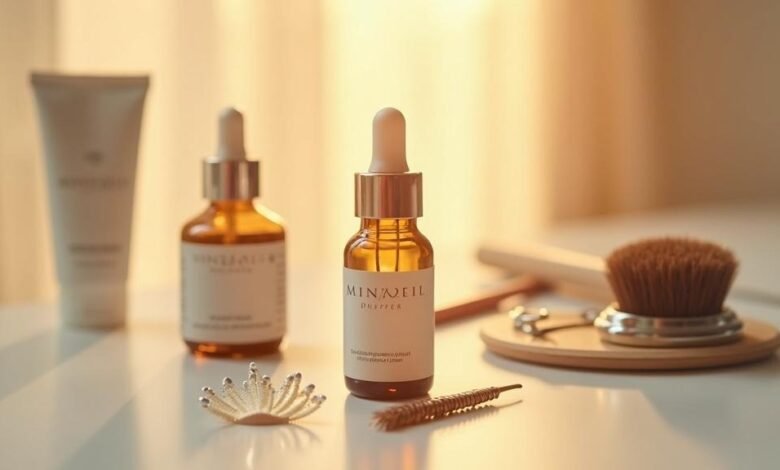
Picture this: a woman in her late 30s notices her ponytail is noticeably thinner than it was two years ago. She googles, gets overwhelmed, and ends up on a forum where half the recommendations are supplements and the other half are prescription medications she has never heard of. It is a genuinely confusing space. These 12 options come up again and again among women who have actually done something about it.
1. HairLine AI (Free Staging Tool)
Before spending money on anything, knowing your actual hair loss pattern matters. HairLine AI is a browser-based tool that reads a webcam shot or uploaded photo, identifies your Norwood stage using Google’s Gemini vision model, and spits out a rough graft estimate with cost range, all without creating an account or paying a cent. The value is in objectivity. Instead of a branded quiz that steers you toward one company’s products, you get a neutral classification that helps you figure out whether you are dealing with early diffuse thinning or something more advanced, and whether a clinic consultation or a topical routine makes more sense right now. It does not prescribe anything. Think of it as the read-before-you-buy step most women skip.
2. Minoxidil (Generic OTC, 2% or 5%)
This is the baseline. FDA-approved for women at 2%, and many dermatologists now recommend the 5% foam off-label. Generic versions cost under $20 for a three-month supply at most pharmacies. Results take four to six months minimum. You have to keep using it or the regrowth reverses.
3. Hims for Her (Topical + Oral Minoxidil)
Hims has the widest product range of any telehealth hair company right now, and it is one of the only platforms offering topical finasteride to women (where appropriate and clinician-approved). Women specifically can access topical minoxidil and oral minoxidil through their service. Combo plans exist. Pricing varies by formula, but the convenience of a clinician review built into the subscription is the actual selling point.
See also: Bright Ideas Made Simple: Transforming Spaces with Modern LED Strip Lighting
4. Keeps (Budget-Friendly Minoxidil Plans)
Keeps positions itself as straightforward and cheaper on three-month plans, with around five dollars for shipping. For women, minoxidil is the primary option here. No frills, no wide product catalogue. If you want one thing handled consistently at a lower ongoing cost, it fits that role.
5. Roman / Ro (Oral Finasteride + Minoxidil Solution)
Roman offers generic oral finasteride and solution-form minoxidil. Notably, it does not carry a foam minoxidil option. Finasteride for women is a more complicated conversation than for men, involving pregnancy risk and hormonal considerations. A clinician consult through the platform would be the right first step for any woman considering it.
6. Happy Head (Custom Prescription Topicals)
Happy Head compounds custom topical formulas, meaning your prescription can combine finasteride, minoxidil, and other actives in a single solution at concentrations a dermatologist specifies. For women who have already done the diagnostic work and know what they need, this kind of tailored approach removes the guesswork from layering multiple products. Pricing reflects the custom nature.
7. Keranique (Women-Only OTC Line)
Keranique markets exclusively to women and uses 2% minoxidil in a spray formula alongside shampoos and conditioners. It is over-the-counter, no consultation required. The active ingredient is the same as generic minoxidil at the same concentration, so the premium price is mostly for the packaging and the women-specific branding. Fine as an entry point, but not uniquely more effective.
8. BosleyRx / Bosley (Rx + Transplant Heritage)
Bosley has decades in surgical hair restoration and has extended into Rx products through BosleyRx. The brand recognition and transplant background mean they attract women who are thinking longer-term and want options from topicals up through surgery under one umbrella. Useful if you want continuity between medical management and potential surgical planning.
9. HairClub (In-Clinic Programs)
HairClub runs physical clinics across North America with programs that include non-surgical hair systems, PRP treatments, and medical management. For women with significant cosmetic concerns who want an in-person, hands-on approach rather than a mail-order prescription, a clinic model has real advantages. Pricing is not published and requires a consultation.
10. Ketoconazole Shampoo (Nizoral or Generic)
Ketoconazole is an antifungal with some evidence suggesting it reduces scalp inflammation that can worsen androgenetic alopecia. It does not regrow hair on its own, but many dermatologists recommend it two to three times weekly alongside a primary treatment. Generic versions are inexpensive. Easy addition.
11. Derma Rolling (Microneedling at Home)
A 0.5mm to 1.5mm derma roller used on the scalp once weekly has shown in small studies to improve minoxidil absorption and may stimulate growth factors on its own. The research is not large-scale, but the cost is low (a decent roller runs $20 to $40) and the risk is minimal if you keep the device clean. Many women in hair loss communities report it as a meaningful add-on.
12. Hair Loss Supplements (Nutrafol, Viviscal, Biotin)
Nutrafol and Viviscal have the most published data of any supplement brands in this category, though the studies are mostly small and industry-funded. Biotin gets attention but is only helpful if you have a deficiency, which most people do not. Supplements are not a substitute for proven treatments. They are most reasonable as support for women whose hair loss has a nutritional or stress-related component confirmed by bloodwork.
A Few Things Worth Knowing
Results from any evidence-backed treatment, minoxidil especially, take months. Stopping treatment reverses progress. Finasteride carries real side effect considerations for women of childbearing age and should only be used under medical guidance. No tool, app, or article replaces a dermatologist who can examine your scalp and run labs.
Common Questions
Is the 5% minoxidil foam actually safe for women, or is 2% the only approved option?
The 2% solution is the only concentration with an FDA approval specifically for women, but dermatologists routinely recommend the 5% foam off-label. The foam vehicle absorbs faster and leaves less residue than the solution. Most clinical guidance treats it as acceptable, though you should confirm with your own provider before switching concentrations.
Can a tool like HairLine AI replace a dermatologist consultation for diagnosing female hair loss?
No. HairLine AI gives you a pattern classification and a rough cost estimate based on a photo, which is useful for orientation before you spend money anywhere. It does not run bloodwork, rule out thyroid issues or iron deficiency, or examine your scalp directly. Think of it as prep work, not a diagnosis.
Why does Keranique cost more than generic 2% minoxidil if the active ingredient is identical?
The active ingredient and concentration are the same. The price difference covers the spray applicator format, the women-specific marketing, and the bundled shampoo and conditioner products. If budget matters, a generic 2% minoxidil solution from a pharmacy does the same job on regrowth. The Keranique system adds convenience and branding, not pharmacological advantage.
Which of these telehealth platforms, Hims, Keeps, or Roman, is most likely to work for a woman specifically?
Hims for Her has the broadest women-focused offering, including topical finasteride for eligible patients and oral minoxidil alongside topical options. Keeps focuses mainly on minoxidil for women with a simpler catalogue. Roman carries finasteride and minoxidil solution but no foam. For women wanting more than basic minoxidil, Hims currently has the wider clinical menu.
Are Nutrafol and Viviscal worth trying alongside a prescription treatment, or are they redundant?
They are not redundant if your hair loss has a nutritional or stress-related component your bloodwork confirms. Both brands have more published data than most supplement lines, though the studies are small and largely industry-funded. Stacking a supplement with minoxidil is reasonable for women with identified deficiencies. For androgenetic alopecia alone, the evidence for supplements as standalone treatment is thin.
Sources
- American Academy of Dermatology, clinical recommendations on treating hair loss in women
- FDA, minoxidil approval documentation (women, OTC)
- Suchonwanit et al., “Minoxidil and its use in hair disorders,” *Drug Design, Development and Therapy*, 2019
- Badri T et al., “Minoxidil,” StatPearls, NCBI Bookshelf
- Avci et al., “Low-level laser and microneedling in hair loss,” published clinical reviews